
A woman walks into a hotel lobby at 11 p.m., exhausted,
having just driven six hours because her father is in the hospital across town.
She doesn't know this city. She doesn't know this hotel. What happens in the
next ninety seconds — whether someone looks up, whether someone actually
listens, whether someone quietly points her toward the nearest 24-hour pharmacy
without being asked — becomes, for her, the entire personality of that town.
She will remember the city by the way that front desk
treated her. Not the skyline. Not the slogan on the welcome sign at the highway
exit. The front desk.
Quick Summary:
Hotels function as a community's de facto guesthouse — the first and often only human interaction a visitor has with a place. That interaction shapes how a visitor perceives an entire city or county, often more than any tourism campaign or civic landmark does. Treating that role deliberately, rather than incidentally, is both a genuine act of community stewardship and a measurable business advantage.
The Guesthouse Nobody Appointed
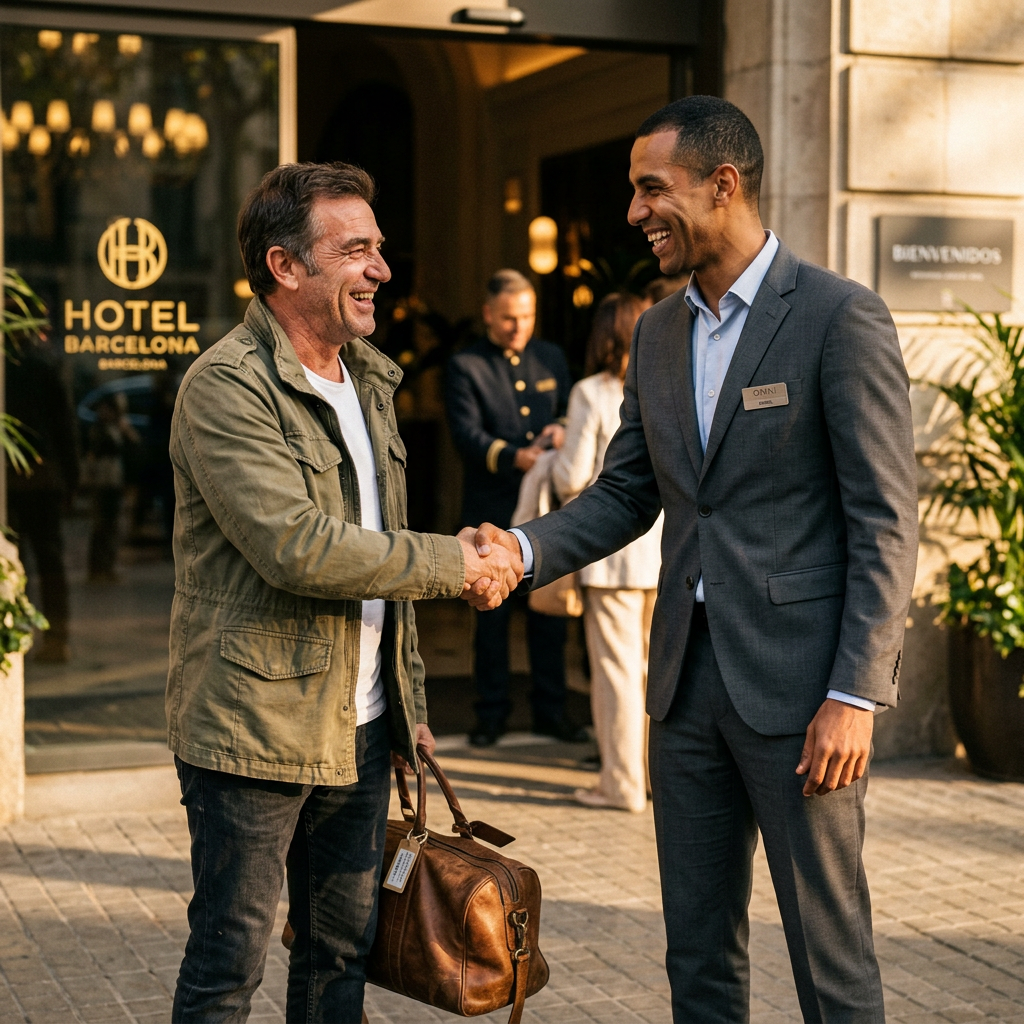
No city council votes a hotel into the role of community ambassador. No ordinance requires it. And yet it happens anyway, every single day, in every lobby in the country — because a hotel is usually the first place a stranger meets a place, and the last place they remember it from before they leave.
Restaurants get one meal. Attractions get an afternoon. A hotel gets the whole stay — the tired arrival, the early check-out, the 2 a.m. question about ice machines, the desperate ask for a decent cup of coffee before a 7 a.m. meeting. That accumulation of small, ordinary moments is where a city's actual character gets transmitted, one guest at a time, whether anyone intended it or not.
What the Research Actually Shows
This isn't just a nice sentiment — it shows up in the data. Destination researchers call it the halo effect: across 22 separate studies, people exposed to a destination through advertising and recent visitation showed measurable perception shifts of at least 28 percentage points on whether that place seemed like somewhere worth living, working, or investing — not merely visiting.
A hotel stay is the most concentrated version of that exposure available. A billboard reaches someone for three seconds at sixty miles an hour. A hotel stay reaches them for eighteen hours, across a dozen small interactions, at the exact moment they're most tired, most vulnerable, and most likely to form an honest impression rather than a polite one.
The Ambassadorship Is Already Happening
— The Only Choice
Is Whether It's Good
Every front desk conversation, every recommendation for where to eat, every small kindness extended to a stranger having a hard week — all of it is civic representation, whether the hotel intends it that way or not. A guest who gets genuine warmth from hotel staff walks away with a warmer opinion of the entire county. A guest who gets indifference walks away assuming the whole town shares it.
Hotels that treat this as incidental leave real value on the table. Hotels that treat it as core to the job — training staff not just on procedures but on genuine hospitality, empowering the front desk to actually solve a stranger's problem rather than just point at a brochure — turn every stay into something closer to a character reference for their entire community.
And Yes — It's Also Just Good Business
None of this requires choosing between warmth and profitability. A guest who felt genuinely cared for returns. A guest who returns brings colleagues, then family, then referrals that no marketing budget can buy at the same price. Community ambassadorship and repeat business are not competing priorities. They're the same behavior, measured two different ways.

Hotels function as a community's de facto guesthouse — often the first and most complete human interaction a visitor has with a place.
The halo effect is measurable: destination exposure shifts perception of a place by at least 28 percentage points across studied destinations, and a hotel stay is among the most concentrated forms of that exposure.
A single staff interaction can shape a guest's entire impression of a city or county — for better or worse, whether the hotel intends it or not.
Deliberate hospitality and strong business performance aren't in tension. Guests who feel genuinely cared for become the guests who return, and who bring others with them.
Key Takeaways
Frequently Asked Questions
Why do hotels have more influence over a visitor's
impression of a city than tourism marketing does?
Marketing reaches someone
briefly and passively. A hotel stay involves sustained, personal interaction
over many hours, often during moments of genuine vulnerability — arriving
tired, needing help, being far from home — which tends to produce a far more honest
and lasting impression.
Is "community ambassadorship" just a soft
framing for customer service?
Not quite. Customer service is about the
guest's individual experience. Ambassadorship is about what that experience
communicates about the entire place — the guest isn't just judging the hotel,
they're forming an opinion of the whole city or county through the hotel's
behavior.
Does investing in this kind of hospitality actually pay
off financially?
Yes, by the same mechanism that makes it meaningful in the
first place. A guest who feels genuinely cared for is more likely to return,
recommend the property, and become a repeat source of revenue — the civic
benefit and the business benefit come from the identical behavior.
This piece draws on AmericanCVB's national research into
the civic and cultural impact of destination hospitality. Daryon Hotels International, whose team has operated hotels and convention centers across a
range of markets, contributed a practitioner's perspective on what genuine
guest-first hospitality looks like in daily practice.